

The following link is to a spreadsheet of all accepted Yorkshire records of current BBRC rarities.
Like all attempts at collating records, there may be a few errors and omissions. Please feel free to contact the YNURC secretary if you notice any.
We will update the spreadsheet every year following the publication of the BBRC annual report.

Across Yorkshire there has been a total of 471 bird species recorded. (plus 4 pending subject to acceptance)
In addition, there are the following either/or species that do not form part of the Yorkshire List:
Zino's/Fea's/Desertas Petrel (one accepted record of Fea's/Desertas, other accepted records are of Zino's/Fea's/Desertas)
Daurian/Turkestan Shrike (one accepted record of Turkestan, other accepted records are of either/or)
A full checklist of the birds of Yorkshire can be found by clicking here (printable version)
It is our intention to update this list annually, following publication of the BBRC annual report.
*Revised December 2025 (based on BOURC January 2026 update, which follows AviList v2025)
For more information on the British Ornithologists’ Union (BOU) categories used in the list please visit https://bou.org.uk/british-list/species-categories/

Geoff Dobbs has compiled data on the first and last dates on which some common migrant birds have been recorded in Yorkshire from the 1970s until 2019. This is a work in progress.
- click here to download a list of the average first and last dates in that period.
- click here to download a master file containing all the early and late dates for each year in that period.
- click here to download a list of the earliest and latest dates ever recorded in the county.

Observers who have first-hand knowledge of rare breeding birds within the county are requested to submit their evidence to the appropriate Yorkshire Recorder or the Report Editor, to be forwarded to the Rare Breeding Birds Panel (RBBP).
The numbers of breeding pairs recorded in Yorkshire from 2012 can be found here.
The RBBP was formed in 1972 by representatives of the Royal Society for the Protection of Birds, the British Trust for Ornithology, The Nature Conservancy Council and British Birds. The present Panel is made up of representatives of the Joint Nature Conservation Committee, RSPB, BTO, and the Association of County Report Editors, together with two independent members and a Secretary.
The Panel’s prime function is to act as a secure depository of sensitive information on the breeding of rare birds in Britain. Information is required for most species on Schedule 1 of the 1981 Wildlife and Countryside Act and other rare species dealt with by the Panel, including all the scarcer non-native breeding species. Information is requested on breeding or potential breeding records in three categories: possible, probable, proved. Definitions of these categories are on the recording forms.
Species for which information is required that are known to have bred, attempted to breed or displayed in recent years in Yorkshire are listed below.
The system used by the Panel for indicating geographical locations in their report is done on a regional basis with Yorkshire being part of ‘England North’. In some instances, the county will be named but should the observer request the omission of ‘Yorkshire’, the Panel will respect this with only the region being named.


Mediterranean gull and Black-necked grebes at YWT North Cave Wetlands - Credit Mike Ashforth
Rare breeding birds in Yorkshire
Garganey
Shoveler
Wigeon
Pintail
Pochard
Quail
Black-necked Grebe
Spoonbill
Bittern
Little Egret
Honey-buzzard
Goshawk
Marsh Harrier
Hen Harrier
Montagu’s Harrier
Corn Crake
Spotted Crake
Common Crane
Avocet
Little Ringed Plover
Black-tailed Godwit
Ruff
Mediterranean Gull
Yellow-legged Gull
Little Tern
Roseate Tern
Turtle Dove
Long-eared Owl
Short-eared Owl
Lesser Spotted Woodpecker
Merlin
Hobby
Peregrine Falcon
Golden Oriole
Willow Tit
Bearded Tit
Woodlark
Marsh Warbler
Savi’s Warbler
Fieldfare
Black Redstart
White Wagtail
Hawfinch
Bluethroat
Common Rosefinch
Rare UK non-native breeding birds in Yorkshire
Bar-headed Goose
Snow Goose
Black Swan
Helmeted Guinea-fowl
Golden Pheasant
Eagle Owl
A full list of the species considered by the Panel is on the RBBP website. Observers may, if they wish, submit records directly to the Panel Secretary, but the normal procedure is to send them in the first instance to the relevant Yorkshire Recorder who will forward them to the Panel. Panel reporting forms are available direct from the RBBP by post, the RBBP website, or the Report Editor/Yorkshire Recorders.
Please note that records should make clear the number(s) of confirmed, probable and/or possible breeding pairs. The definitions for these can be found here.
Write to:
The Secretary, (Mark Eaton)
Rare Breeding Birds Panel,
e-mail: This email address is being protected from spambots. You need JavaScript enabled to view it.
website: www.rbbp.org.uk
Species Requiring a Description by the YNU Rarities Committee
The following list of county rarities requires a description and/or photographic evidence to secure the acceptance needed from the YNURC for publication within the Yorkshire Bird Report.
In addition, the Birds Section reserves the right not to publish records of scarce birds which cannot be attributed to a named observer and are unsupported by photographic evidence.
Click here to Download a Description Form
Ruddy Duck
Black Brant
Taiga Bean Goose
Common Eider (borealis)
Surf Scoter
Ring-necked Duck
American Wigeon
Green-winged Teal
Corncrake (away from Lower Derwent Valley)
Spotted Crake (away from Lower Derwent Valley)
Stone-curlew
Black-winged Stilt
American Golden Plover
Black-tailed Godwit (nominate)
Red-necked Phalarope
Lesser Yellowlegs
Buff-breasted Sandpiper
Pectoral Sandpiper
White-rumped Sandpiper
Black Guillemot
White-winged Black Tern
Roseate Tern (inland)
Sabine’s Gull (inland)
Ring-billed Gull
Kumlien’s Gull
White-billed Diver
Wilson’s Petrel
Glossy Ibis
Night-heron
Purple Heron
Alpine Swift
Honey-buzzard
Golden Eagle
Goshawk (Coastal East Yorkshire)
Montagu’s Harrier
Black Kite
White-tailed Eagle
Rough-legged Buzzard
Hoopoe
Red-footed Falcon
Golden Oriole
Great Grey Shrike
Woodchat Shrike
Chough
Penduline Tit
Short-toed Lark
Melodious Warbler
Blyth’s Reed Warbler
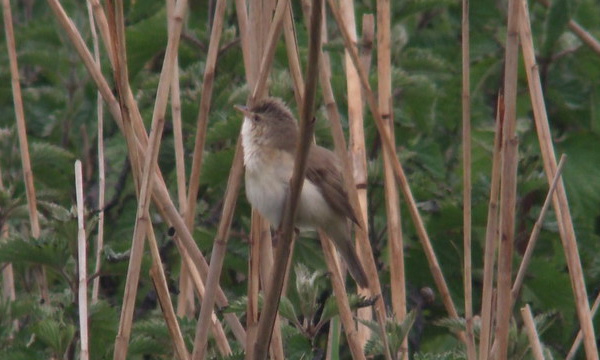
Marsh Warbler
Red-rumped Swallow (except Spurn)
Pallas’s Warbler
Radde’s Warbler
Dusky Warbler
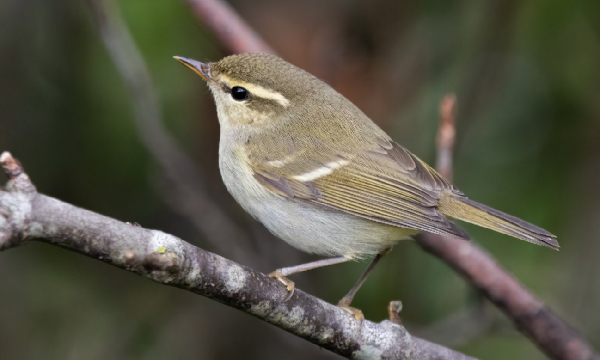
Greenish Warbler
Arctic Warbler
Dartford Warbler
Rose-coloured Starling
Nightingale
Bluethroat
Red-flanked Bluetail
Grey-headed Wagtail
Citrine Wagtail
Olive-backed Pipit
Parrot Crossbill
Serin
Little Bunting (inland)
Ortolan Bunting
Cirl Bunting
Changes to the list
From 1st January 2017, Ferruginous Duck was re-instated to the BBRC list
From 1st January 2019, all races of Subalpine Warbler and Arctic Redpoll added to BBRC. Lesser Yellowlegs and Arctic Warbler have also been removed from the BBRC list and added to the YNURC list. YNURC also no longer adjudicates coastal Siberian Chiffchaff records (and Spurn Red-rumped Swallows) unless local recorders are not satisfied with the identification but would welcome documented claims of all forms of Lesser Whitethroat other than nominate.
From 1st January 2020, BBRC added Lesser Scaup and Kentish Plover to their list.
From 1st January 2021, White-spotted Bluethroat is now BBRC.
From 1st January 2023, Ortolan Bunting is now a YNURC description species. Cattle Egret has also been removed from YNURC.
From 1st January 2026, a review of the description species means that Ruddy Duck, Common Eider (borealis), Green-winged Teal, Corncrake and Spotted Crake (away from LDV), Stone-curlew, Black-tailed Godwit (nominate), Red-necked Phalarope, Pectoral Sandpiper, Black Guillemot, Roseate Tern (inland), Sabine’s Gull (inland), Goshawk (Coastal East Yorkshire), Hoopoe, Golden Oriole, Great Grey Shrike, Pallas’s Warbler, Nightingale, Bluethroat, Grey-headed Wagtail, and Serin have been added to the Yorkshire descriptions list. This brings the species list in line with the constitution criteria of "either 100 or fewer individuals in the most recent ten-year period, or ten or fewer individuals in at least seven of the last ten years". County Recorders and the secretary will ask for descriptions of scarce inland migrants as they are reported. Siberian Chiffchaff (inland) has been removed from the list.
Races and other unusual occurrences
The YNURC will require descriptions to support records of difficult to determine races, particularly those whose taxonomic status is under review. Many of these are now considered by BBRC and descriptions will be forwarded where required. A full list of species and races considered by BBRC can be found here: https://www.bbrc.org.uk/main-information/species-taxa
The YNURC is also willing to assist in adjudicating any records not on the above list for local groups and societies.
Submitting descriptions
If you would like to report a rarity, please complete a description form downloadable from the YNU website and send it to the YNURC Secretary, Thomas Willoughby, whose e-mail address is shown on the form. The work of the Rarities Committee can be aided if observers submit descriptions as soon as possible. A description form can be downloaded here
Descriptions
Details should include the description taken in the field, before reference to books; the locality; date and time; habitat; weather conditions; optical aids used; distance from the bird; period of observation; species present for comparison and previous experience of the species. If anyone disagrees with the identification should also be noted. The YNURC welcomes the electronic submission of records as photographs and/or sound recording with the provision that some detail is supplied about location, first/last dates and the name(s) of the finder(s).
Photographs
We welcome the electronic submission of photographs, with the provisions stated in the previous paragraph about names, location and dates. If the finder/identifier has not submitted the record, but a photograph has been published in a magazine or on the internet, then the magazine/website will be credited.
Sound Recordings
Any sound recordings which accompany a description are requested to be as extensive as possible, with as many examples of call/song as possible/realistic. If any post processing has been applied, then please state this in your description (high pass filter etc) but try not to edit calls too much or remove sounds between phrases. Sonograms accompanying an MP3 or WAV format would be ideal.
‘Nocmig’ records
The YNURC requires a recording to be provided for description species that preferably has several examples of calls audible. We would like to have the whole call sequence - not just the edited calls isolated. See previous paragraph for further details.
Submission of all descriptions will be acknowledged and the decisions on each published on the website, with all accepted records also detailed in the Bird Report. If a record has been deemed ‘not proven', it doesn’t necessarily mean that the bird has been mis-identified, but that there is not enough detail to be conclusive.
Birds ~ Contacts and Recorders
Secretary: Vacant
County Recorders
East Yorkshire: Jacob Spinks
North Yorkshire: Keith Wimbush
South Yorkshire: Martin Wells
West Yorkshire: Jacob Spinks
YNU Rarities Committee
Chair: Garry Taylor
Secretary: Thomas Willoughby


